Tubular Breast Correction in Westchester County & NYC


Greenwald Plastic Surgery
Tubular Breast Correction in Westchester County & NYC
Serving Patients in Putnam county, White Plains, Yonkers, New Rochelle, & Mount Vernon
- Overview of Nipple Areola Correction
- What the Procedure Entails
- Who Is an Appropriate Candidate?
- What Does It Cost?
Overview of Tubular Breast Correction
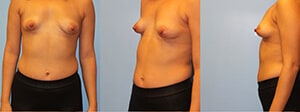
Many women seek out Dr. Greenwald for his expertise in correcting size, shape and symmetry issues with their breasts. One of the most common breast development issues is tuberous breast deformity. Also known as tubular or constricted breasts, tuberous breast deformity can affect one or both breasts and may occur asymmetrically. One breast may have a severe form while the other breast has a more mild form (forme fruste tubular breast). Hallmarks of a tuberous breast include a prominent nipple-areolar complex (a puffy areola), a high inframammary crease and a deficiency of inferior breast skin and tissue. Tubular breasts are typically spaced widely on the chest wall. It is important to remember that surgical correction of tubular breasts is not simply a breast augmentation. It is important for your surgeon to recognize even the mildest case of tubular breast, as its correction is different from a straightforward breast augmentation on a small but otherwise normal breast.
What the Procedure Entails
Specific surgical maneuvers are utilized to correct tubular breasts, which differentiate this procedure from a more straightforward breast augmentation. Not all patients with tubular breasts want or need breast implants. However, the majority of tubular breast patients do desire some increase in their breast size. Typically, an implant is introduced through a periareolar incision. The inframammary crease is lowered and the inferior breast parenchyma is radially divided to expand the lower portion of the breast. In some instances, very dense and fibrotic breast tissue is removed to enhance this expansion. Implants are placed underneath the pectoralis muscle. Frequently, a periareolar or Benelli mastopexy is performed to reduce the size and puffiness of the areola. Surgery takes approximately one and a half hours and patients resume normal activities within a few days.
Who Is an Appropriate Candidate?
Those interested in tubular breast correction should arrange an appointment with a board-certified plastic surgeon such as Dr. Greenwald to find out if they are appropriate candidates. During your consultation, the Fairfield / Westchester County cosmetic surgeon assesses the patient’s breasts, overall body type and aesthetic concerns. He then determines whether she is an appropriate candidate and outlines a suitable treatment plan to address her concerns.
In general, appropriate candidates include women who have a good self-image overall but are unhappy with the appearance of their breasts and comprehend the surgical risks but believe that the advantages offset the potential risks of the procedure.
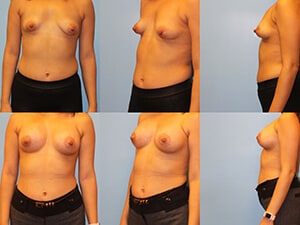
Make sure you are able to view before-and-after photos of similar patients. This will reassure you that your surgeon has experience with tubular breast issues as well as set your expectations. In general, patients with tubular breasts are amongst our happiest patients.
How Much Does Tubular Breast Correction Cost?
The overall cost of tubular breast correction includes the plastic surgeon’s fee, the anesthesiologist’s fee, the cost of the operating room and the assorted costs related to breast surgery (e.g., the expense of any lab testing needed, oral pain medication, a surgical bra, if required, etc.).
The overall cost of the surgery varies, depending on the type of surgery required to correct the patient’s aesthetic concerns, and whether another procedure is being performed at the same time (e.g., breast lift surgery). To obtain a cost estimate of breast surgery, it is important to arrange a consultation with Dr. Greenwald, so he can evaluate your unique anatomy and aesthetic objectives for surgery. He can then provide you with a more accurate quote.
Why Choose Dr. Greenwald For Breast Surgery
Tubular breast correction requires far more than technical skill with implants. It demands a surgeon who understands complex breast anatomy, asymmetry, and the structural differences that distinguish constricted breasts from standard cosmetic concerns. Dr. Greenwald is board-certified by the American Board of Plastic Surgery and completed advanced fellowship training in aesthetic surgery. He has performed thousands of breast procedures and is widely recognized for delivering natural, proportionate results.
His experience extends beyond primary breast augmentation to complex revision breast surgery, where precision and judgment are critical. He also served as a clinical investigator for cohesive silicone gel implants, giving him early and in-depth experience with modern implant technology.
Dr. Greenwald personally performs every procedure and places every stitch. All surgeries take place in a fully accredited, state-of-the-art surgical facility, supported by our experienced anesthesia and nursing team and always focused on patient safety. This combination of technical expertise, aesthetic judgment, and individualized care makes a meaningful difference in both surgical experience and long-term results.
Frequently Asked Questions About Tubular Breast Correction
How is tubular breast correction different from a standard breast augmentation?
Tubular breasts develop with tight tissue at the base of the breast and a higher-than-normal breast fold. This limits natural rounding in the lower part of the breast. Dr. Greenwald corrects this by carefully releasing the tight tissue and reshaping the breast so it can expand into a more natural contour. He may also lower the breast fold and reduce areola puffiness before addressing size.
A standard breast augmentation focuses mainly on adding volume with an implant. Tubular breast correction is more complex because it rebuilds the breast’s shape and structure first. Dr. Greenwald creates a balanced foundation so that if an implant is needed, it enhances a properly formed breast rather than simply filling a constricted space.
Can a significant asymmetry be corrected?
Yes. Tubular deformity often affects each breast differently. Surgical planning addresses volume differences, fold position, and areolar size to improve balance and symmetry.
Do all patients with tubular breasts need implants?
Not always, although most women with tubular breasts do want fuller breasts. Often, this means Dr. Greenwald creates a periareolar incision around the areola and inserts an implant through it. Dr. Greenwald discusses your desired outcome and recommends the solution most effective for achieving the results you want.
Will my results look natural?
When properly corrected, tubular breasts can achieve a rounded lower pole and more balanced contour. The goal is proportion and harmony with the patient’s body rather than an overcorrected appearance.
Can tubular breast surgery be combined with other procedures?
Yes. Some patients combine correction with a breast lift or other aesthetic procedures. Combination surgery depends on your anatomy, goals, and overall health.
Is tubular breast correction more complex than typical breast surgery?
Yes. Because tubular breasts involve developmental structural differences, the procedure requires specialized surgical maneuvers and experience with complex breast anatomy.
How long do results last?
The structural correction is long-lasting. While aging, weight fluctuations, and pregnancy may influence breast appearance over time, the foundational reshaping remains stable.
Schedule a Consultation
Dr. Greenwald has helped thousands of women throughout NYC, Westchester County and Fairfield County, including Greenwich and Stamford, CT, feel confident about their breasts. If you would like to learn more about tubular breast correction, schedule a consultation. Contact Dr. Greenwald’s practice by calling (914) 421-0113. Or, book your appointment by filling out our contact form today.